“Healthy ageing” used to mean anti-wrinkle creams and multivitamins. In 2026, it means something bigger a full lifestyle shift toward nutrition, movement, and daily habits that help the body stay strong for longer. And increasingly, food scientists and nutritionists are landing on the same conclusion: what you snack on matters just as much as what you eat for dinner.
This is where millets quietly step into the spotlight. Long valued for gut health and blood sugar balance, millets are now being recognised for something bigger their role in supporting bone density, muscle preservation, and cellular health as we age. Here’s what the science says, and why it matters for anyone building long-term wellness habits at 25 or 65.
Why “Healthy Ageing” Is Having a Moment
Longevity has become one of the defining wellness themes of the decade. A large majority of consumers now say healthy ageing is extremely important to them, and food brands are responding not with anti-ageing supplements, but with everyday products built around protein, fiber, and functional nutrition that support the body over the long run. The logic is simple: ageing well isn’t a switch you flip at 50. It’s the compound effect of what you eat, every single day, starting decades earlier.
That shift in mindset is exactly why millets are having their moment. They were never designed as an “anti-ageing food” but their natural nutrient profile happens to check almost every box researcher now associate with healthy ageing.
Bone Health: Millets’ Best-Kept Secret
Bone density naturally declines with age, and for women, that decline accelerates sharply after menopause due to dropping estrogen levels. This is where millets particularly finger millet (ragi) have genuinely strong research backing.
Finger millet is naturally rich in calcium, along with magnesium and phosphorus, two minerals that work alongside calcium to help the body absorb and use it effectively. Clinical research on premenopausal and postmenopausal women has found that regular finger millet consumption is linked to measurable improvements in bone mineral density and calcium levels a meaningful finding, since low bone density affects a significant share of Indian women even before menopause.
For office-going professionals who spend most of the day seated, and for anyone thinking about bone health earlier rather than later, that’s a compelling reason to make millet snacking a habit now, not a reaction later.
Antioxidants and Cellular Ageing
Ageing at a cellular level is closely tied to oxidative stress the slow accumulation of damage from free radicals in the body. Millets are naturally rich in phenolic compounds and antioxidants, and early research suggests certain millet varieties, including finger millet and kodo millet, may help protect proteins like collagen from the kind of damage associated with visible and cellular ageing.
This doesn’t mean a millet cookie replaces skincare or medical care but it does mean the humble grain in your snack box is doing more behind the scenes than most people realise.
Muscle, Metabolism, and the Protein Conversation
One of the biggest global food trends in 2026 is the surge in protein-focused eating, largely driven by growing awareness that muscle mass naturally declines with age a process that, left unaddressed, affects strength, mobility, and metabolic health over time. Millets aren’t a high-protein food in the way lentils or eggs are, but they offer a meaningful contribution of plant protein alongside fiber and slow-releasing carbohydrates, making them a smart part of a protein-conscious diet rather than a replacement for it.
Combined with their low glycemic index, millets also support stable blood sugar and metabolic health both closely linked to long-term wellness and reduced risk of age-related conditions like type 2 diabetes.
Gut Health: The Foundation Ageing Well Depends On
A growing body of research connects gut microbiome health to nearly every aspect of ageing inflammation, immunity, even cognitive health. Millets contain dietary fiber and naturally occurring compounds that support a healthy gut microbiota, and some studies have specifically linked millet-based diets to improved glycemic control and reduced inflammatory markers two factors closely tied to healthy ageing outcomes.
In simple terms: a happier gut today is one of the best investments you can make in how you feel a decade from now.
What This Means for Everyday Snacking
None of this requires an overhaul. Healthy ageing isn’t about restrictive diets or expensive supplements it’s about consistent, small choices that compound over years. Swapping a sugar-laden biscuit for a millet cookie, or a fried chip for a baked millet crunchie, is a small decision that adds up when repeated daily across a career, a decade, a lifetime.
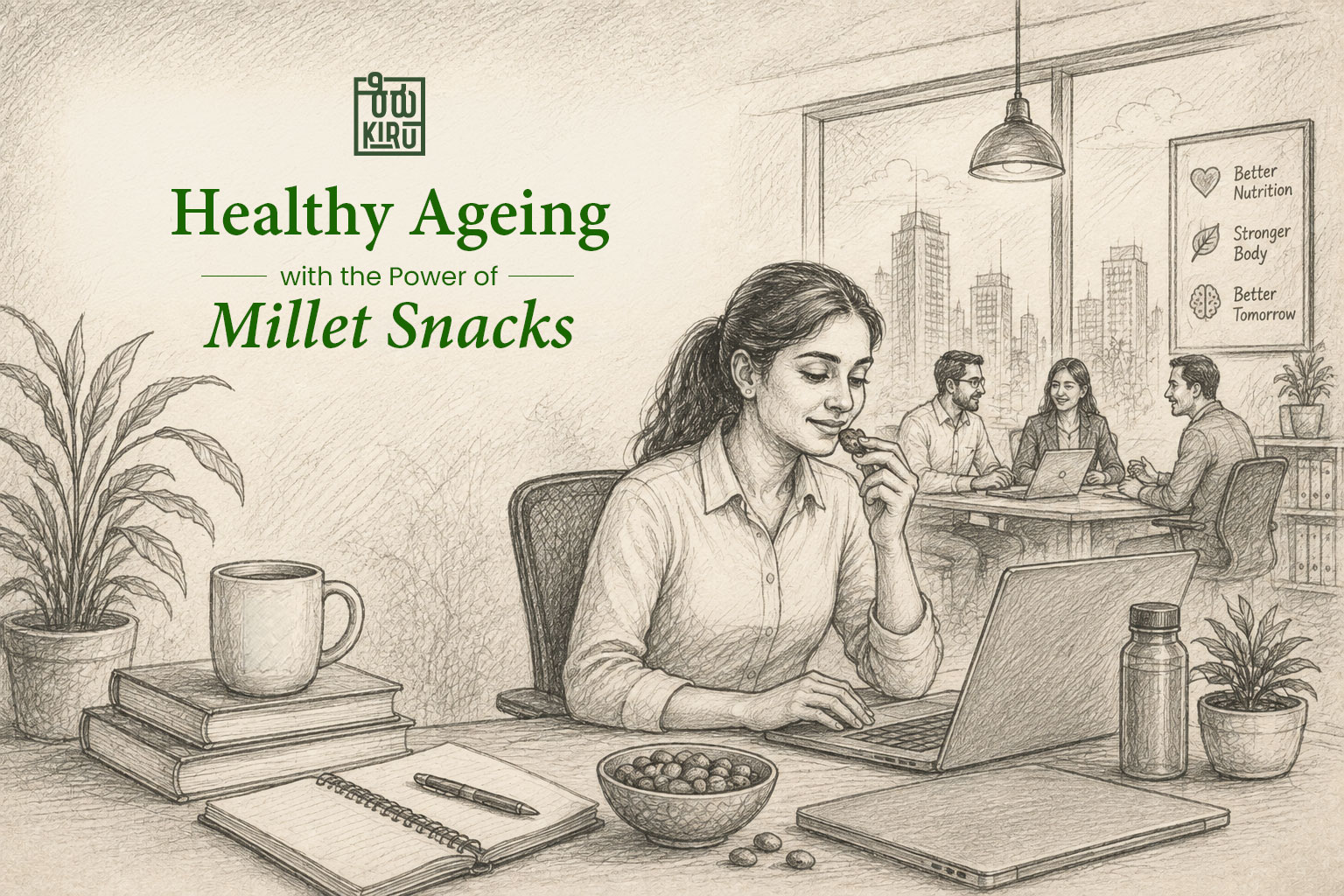
That’s especially relevant in the workplace, where snacking happens almost on autopilot grabbed between meetings, eaten at a desk, rarely a conscious choice. Making the default option a nutrient-dense one means employees are supporting bone health, gut health, and metabolic wellness without having to think about it.
The Kiru Take
We’ve always believed snacking should do more than fill a gap between meals. As the science around millets and healthy ageing continues to grow, it reinforces something we’ve built our entire brand around: real, wholesome ingredients aren’t just good for today’s energy levels they’re an investment in how you’ll feel years from now.
Whether you’re 25 and building habits early, or further along and looking to protect bone and metabolic health, the right snack can quietly do a lot of heavy lifting.
Want to bring healthy-ageing-friendly snacking into your workplace?
Explore Kiru’s millet snack range and see how small changes at the pantry can support your team for the long run.